The Academic of the Year Timo R. Stewart: Researchers’ role in public in need of discussion
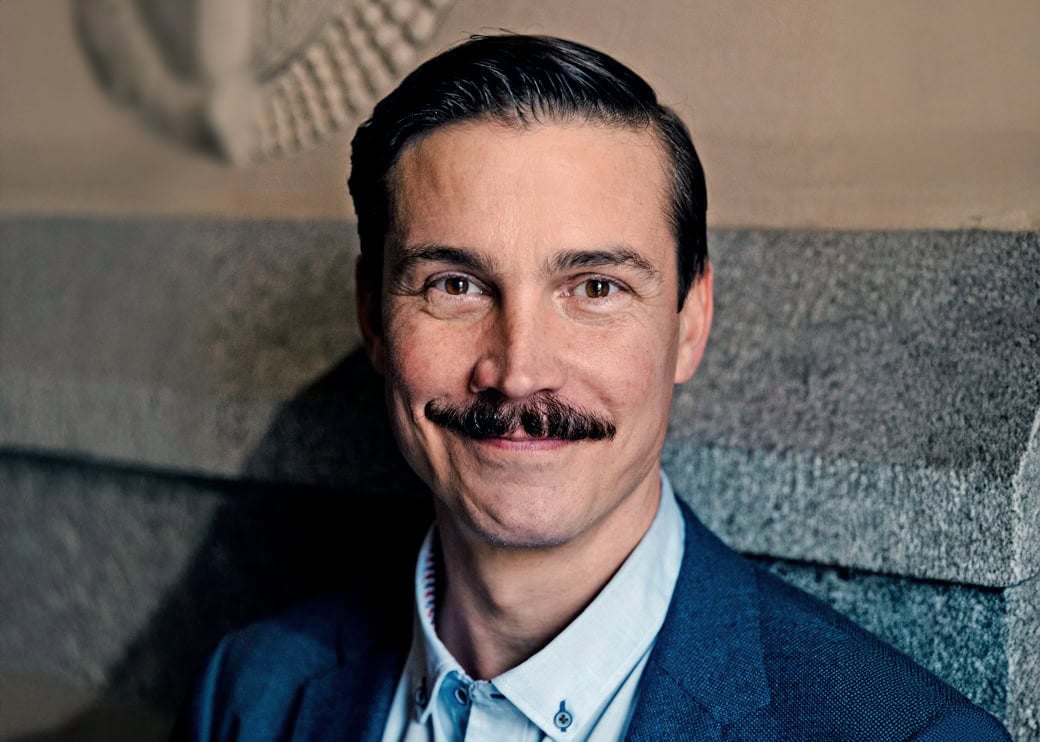
Intentional misunderstandings, hate speech, silencing attempts. Academic of the Year, researcher and non-fiction writer Timo R. Stewart has had to witness these over the course of his career. In his opinion, a researcher conducting science with public funds plays an important role in social discourse.
Text minna hiidensaari images milla talassalo english translation marko saajanaho
“I do not consider myself a Middle East expert, nor do I advertise myself as such”.
According to researcher Timo R. Stewart, that combination of words alone reflects a western viewpoint. He offers up a comparison. “Does anyone call themselves a Europe expert?”
Stewart has served as a Senior Research Fellow at the Finnish Institute of International Affairs since 2021. The highly in-demand speaker and presenter says he is more interested in attitudes towards the Middle East. As a researcher, he has focused especially on religious nationalism, the political history of Palestine, and research of that history. He knows the social process through which peoples are born.
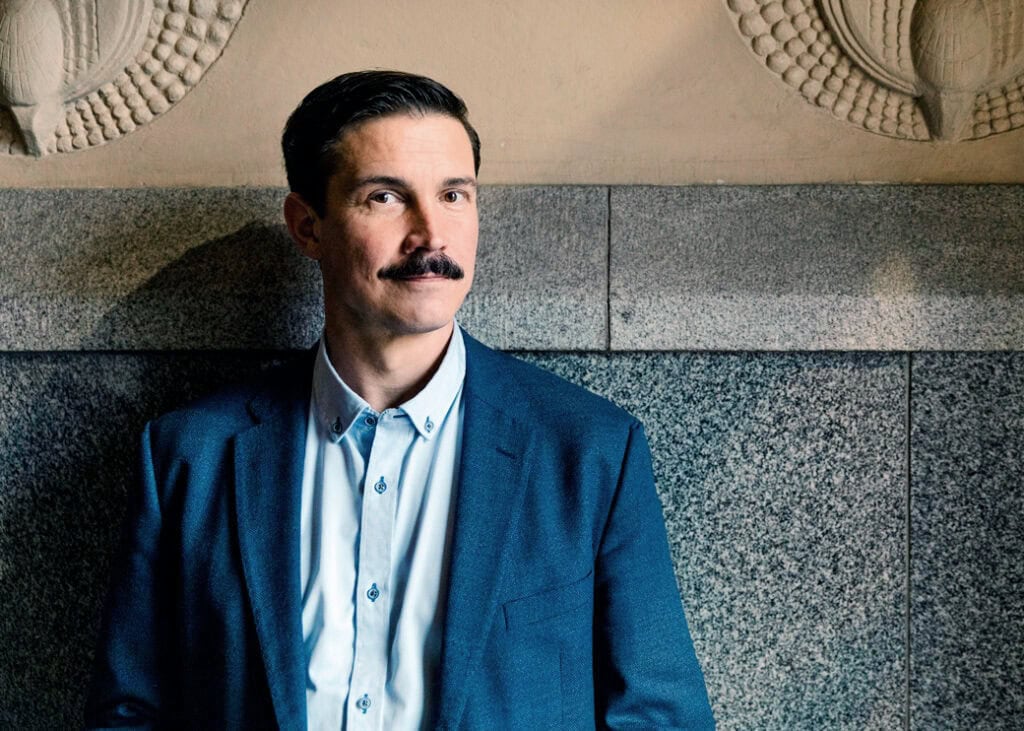
Steward was chosen as the Academic of the Year primarily because as a researcher, he is merited as a clear verbaliser of complex and difficult themes and brought researched information into public discourse.
The background and analysis provided by Stewart for daily political events have been in increasing demand especially since Hamas attacked Israel in 2023.
“The Institute of International Affairs encourages us to speak publicly and simultaneously be informed of the imagery we researchers use to illustrate historical narratives, for example.”
Attracted by argumentation and history
Stewart was enthused about history from an early age and became interested in argumentation and clear presentation while spending a year living in his father’s native country of New Zealand at 16 years old. Later, as a student of political history at the University of Helsinki, he participated in the English-language Helsinki Debate Society’s competitive debates.
Stewart’s interest in arguing social topics also served as his guiding light when he served as the editor-in-chief of the independent The Ulkopolitist online publication and as the chair of the association founded around the publication.
“The whole point of that was public discussion.”
Stewart’s first media appearance was on Yle’s Politiikkaradio programme. The topic of the broadcast was Finnish Christian Zionism, which was the theme of his 2015 history of ideas-based doctoral thesis.
“I was very nervous.”
No grand career plans
SStewart states his career has not been planned out. He has developed expertise as an analytical researcher and learned about handling conflicts in the field.
“I split my work into two separate boxes. I have been a researcher in different organisations while also working with my hands full of clay in NGOs. I have sat in vans, riverboats and conference rooms to work on conflict solutions and seen how occupation mechanics work. At the Institute of International Affairs, I have been able to combine these two roles.”
On the other hand, Stewart says the system does not support a career path of doing different things like this.
“If you do research with public funds, you have the obligation to be available. That is socially important.”
“I have also been foolhardy. I want Finnish to stay as a language of science, so I have done monographs in Finnish, for example. Those are not very sensible when applying for international research funding.”
Growing into a public debater has also not been a conscious choice on Stewart’s part. According to Stewart, the only performance training he has ever had was reviewing his performances after his first public speeches, noting his mannerisms and other aspects he found annoying.
“Listening to my own interviews felt absolutely awful.”
He does have one very clear principle.
“If you do research with public funds, you have the obligation to be available. That is socially important.”
No ultimate truth
Stewart has been criticised for speaking bluntly.
“A researcher appearing in public cannot just be repeating research data. You have to put things in context with new ideas, and that must also be challenged. The role of research data in public discourse also involves interpreting the situation by, for example, explaining risks and information relating to the parties involved. The researcher presents an evolving, research-based analysis. They rarely have up-to-date research on the exact topic the media is interested due to current political events.”

Stewart reminds us that the researcher must also avoid crossing lines. “We must also disclose where the data is uncertain or what is unknown. When you choose to open a certain battle, you must be careful not to open something else at the same time.”
When giving interviews, Stewart has noticed that reporters occasionally frame a certain statement, perhaps based on a misunderstanding, and want expert confirmation.
“Sometimes, there have been lengthy background calls. I think it is worth it.”
”I do not give you the ultimate truth about anything. I give my opinion on what may be the case.”
He emphasises that a researcher appearing in media is not meant to end any discourse.
“I do not give you the ultimate truth about anything. I give my opinion on what may be the case. I hope I have been able to help by highlighting uncertainties, options regarding the continuation of a situation, and the multi-level nature of information. When I feel I lack sufficient knowledge about a topic, I turn down the interview and recommend a colleague of mine.”
Being careful with silencing attempts
The conflict between Palestine and Israel is a volatile subject. As a messenger, Stewart has had his share of dirt thrown at him. How does he react to inappropriate comments?
“I remind myself that this is an attempt to silence me. Then it feels less personal. If I submit by silencing myself, then I am the problem.”
Stewart says he reads social media comments primarily to determine topics people often misunderstand so he can bring substance to the discourse.
“I read the amount of rubbish I can bother with. I don’t usually read comments sections. On social media, you can also mute accounts and take a break from following.”
“Researchers are pressured. Lambasting the Academy of Finland’s funding decision has become a national sport. There is hate speech and other phenomena pressuring researchers to avoid certain subjects.”
Ultimately, the importance of social media rubbish shrinks into a small part of the whole that is Stewart’s life experience.
“It feels odd when someone tells me how brave I am. Should I get upset over someone not liking my opinion? I know people whose families have been tortured or killed. Things said on social media are nothing compared to that.”
Stewart hopes for more public discussion between researchers about the researcher’s role in public, its benefits and risks.
“Researchers are pressured. Lambasting the Academy of Finland’s funding decision has become a national sport. There is hate speech and other phenomena pressuring researchers to avoid certain subjects.”
Benefit pressures and fixed-term contracts narrow the perspective
Stewart is used to fixed-term employment. His longest employment period has lasted two years. Even his four-year term at the Institute of International Affairs has consisted of three separate fixed-term contracts. “The good thing is that you must carefully consider the relevance of your research subject. On the other hand, fear is always there. Fixed-term employment narrows your perspective and keeps your antennae up. You must be on the lookout for other opportunities.”
Stewart says that fixed-term employment eats up creativity, deliberateness and receptiveness. It also increases the fear of failure.
“Truly interesting research is not created in a pressurised situation. Thinking about results and benefits hurts research work.”
“When something has been uncertain, I have chosen the option I liked.”
Stewart’s career is an example of how the nature of science can mean benefits are not obvious beforehand.
“Finnish Christian Zionism did not seem a relevant topic in Finland, but now it is in the public eye.” He is also complimentary of his Valter Juvelius study, which he was able to work on in peace. “It was not efficient or useful when presented, but eventually it became interesting.” Stewart’s book based on this study received the Lauri Jäntti Award.
Towards conflict
Stewart has a rule of thumb for uncertain situations.
“When something has been uncertain, I have chosen the option I liked.”
This wisdom will soon come in useful once more. At the end of the year, Stewart’s research contract with the Institute of International Affairs will expire. Stewart was surprised to see he would not be kept on.
“Now, joy has entered my soul. It would be nice to lose myself in a research project again after a long time.”
Stewart’s future plans are still not clear, but interesting research topics certainly are.
“The Israel–Palestine conflict has increased radical right-wing ideology and ethnonationalism in Christian Zionism in a way that is tied to identity politics, not religion. When a friend of mine heard this, they sighed and wondered how I had managed to find such a topic again.”
It seems that research of complicated, sensitive conflicts is the common thread tying together Stewart’s work.
Timo Russell Stewart, Doctor of Social Sciences
Born: 1980 in Helsinki, Finland.
Work: Senior Research Fellow at the Finnish Institute of International Affairs 2021–2025, non-fiction writer, work covering Israel–Palestine conflict as well as Myanmar and Afghanistan.
Family: Spouse and two children.
Hobbies: Gym, outdoor activity with the dog, reading.
What are you known for in your work community? As the captain of the Kilometrikisa team encouraging biking to work.
What are you not known for? Sailing. “This took a bit of a break after the kids were born but will hopefully be a part of my life again eventually. Few people are also aware I am a former clarinet player and classical music enthusiast.”