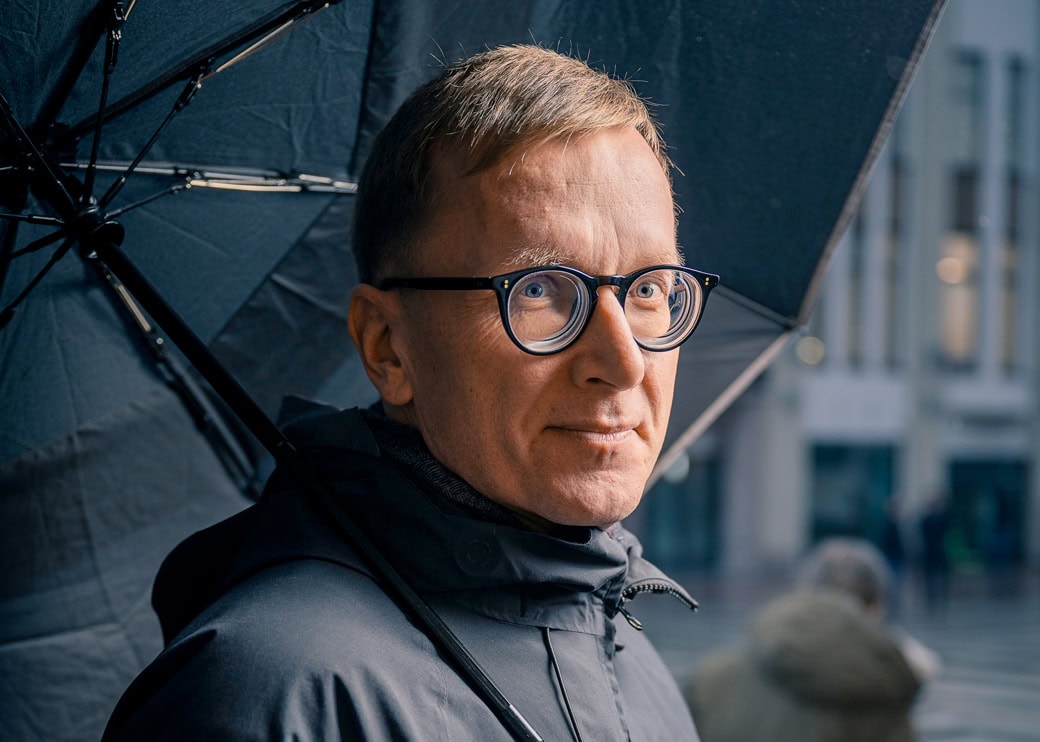
Professor of the Year 2026 Jani Erola: Promises and limits of education
Professor of the Year 2026 Jani Erola is also one of the fifteen recently appointed Research Council of Finland Academy Professors. His new project studies the connections between increased level of education, job market changes, and new technology in social inequality.
Text minna hiidensaari imagesvesa tyni
english translation marko saajanaho
Increased level of education and expertise no longer counterbalances social inequality, as it has done thus far in recent history. University of Turku Professor of Sociology and demography expert Jani Erola is puzzled by this.
“Now is an exceptional time to study the phenomenon. There are black boxes related to the social effects produced by education. From previous studies, we know that, for example, parents’ level of education and family background affect the education of their children despite the inter-generational differences partially being counterbalanced by the increasing scope of the education system. This no longer seems to be happening. The differences are also based on gender. We must ask ourselves if we have done things wrong or if this is a hereditary issue. Most likely both”, says Erola, Professor of the Year 2026.
While we are living through a watershed moment in regard to questions in the field, Erola is also facing the beginning of a personally significant phase. He was recently appointed as an Academy Professor by the Research Council of Finland, one of fifteen. 244 researchers competed for five years of project funding. The applications were peer-reviewed internationally.
“I have not been able to conduct my own research in eight years. With this, I am buying freedom as a researcher.”
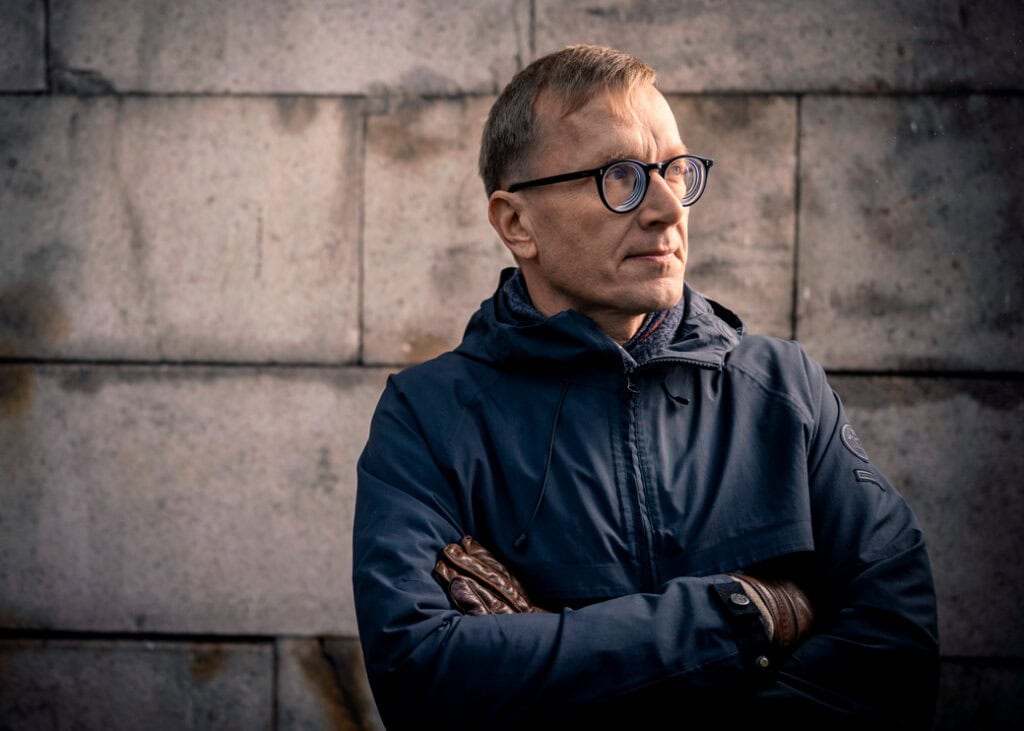
The mechanisms and heritability of social inequality have interested Erola throughout his research career. One of this most significant research project is the INVEST flagship project, a joint effort between the RCF and the Finnish Institute of Health and Welfare led by Erola since 2019. The project, already establishing itself as a research centre and gathering multidisciplinary science around itself, has studied mechanisms contributing to social inequality and ways to prevent social disadvantages.
“We were one of the first flagships. We did not immediately realise how big the project was.”
The majority of Erola’s time has been spent leading the project, which comprises over 200 workers.
Among his successes, Erola also lists the five-year INDIRECT project funding he received in 2014 from the European Research Council. This project studies the mechanisms creating inter-generational inequality. “I did not expect to get that funding because the applicants were typically not social scientists.”
This is a time of unique data
Erola’s STRATEQ academy professorship project is about to get underway and study the effects of the quantitative increase of higher education, longer education careers, job market changes, and new technologies such as AI affect the equality of opportunities. In other words, how the effect of one’s family background on the formation of social inequality could be reduced. The relevance of the project is especially tied to the breadth and internationality of the available research data.
“Previous data has not been enough to study the change. In social sciences, ideas alone are not enough for research. We must have unique data.”
Now, that exists.
“We can follow the change from one generation to another throughout their lifespan. In addition to Finnish and Nordic data, we use German and U.S. data, which has matured like the Finnish data.”
”In social sciences, ideas alone are not enough for research. We must have unique data.”
Regarding the heritability of social status, studies conducted thus far have established that just one example of an aunt or uncle has a motivating effect on an individual’s education and, consequently, their social mobility.
Erola demonstrates that compared to survey data, birth cohort data offers different opportunities to assess, for example, which social groups researchers have missed, which mechanisms have facilitated Brexit, or what has accelerated the rise of extremist phenomena.
The inequality of reward systems
The large amount of research data on phenomena emerging as topics of public discourse is described by Erola as a social scientist’s fortune and horror.
“Researchers understand different kinds of inequality exist. We produce distinctions culturally. We want to reinforce certain differences and consider others undesirable. There are no immediately obvious answers to what is acceptable and what is not, or when these differences should be balanced or rewarded.”
According to Erola, there should be more discussion about what society rewards sufficiently and what it perhaps rewards too much. For example, individual trajectories connected to coincidences and strokes of luck, such as being born into a wealthy family, may be rewarded in the system.
Another problematic aspect of modern day according to Erola is how the job market values and thus rewards education in an uneven manner. This inequality will be boosted by AI.
“Some are paid astronomical sums for their expertise whereas other people’s expertise loses its value. The related fairness, such as IT millionaires, is a difficult topic of discussion, but it should be done.”
According to Erola, welfare society services are largely secured through middle class solidarity, meaning that the tax incentives of the highly educated middle class cover most of the services.
“How far will this solidarity go especially now that the middle class has its status threatened?”
Threats posed by technology, such as AI at the moment, are not a new phenomenon. The threat of digitalisation on employment has been discussed since the early 2000s, and technology has replaced tasks formerly carried out by people. Now, AI has become a worry for even the highly educated because it can do what those people themselves are good at, which is collecting and analysing data.
In Erola’s opinion, the ongoing shift is similar in nature to Finland moving from an agricultural society to an industrial one.
From notice board to morning TV
Sociology became Erola’s chosen field in a somewhat roundabout way, because in his school days he was planning a career in journalism. He noticed that entrance exam guides often mentioned the journalist profession as an example when talking about social sciences in particular.
“I decided to optimise and read the same sociology entrance exam book for four different exams. I was sure I was headed for a sabbatical.”
University admittance in the 90s is effectively illustrated by the way Erola happened to be near a landline phone when the Head of Study Affairs called. They were going through the reserve list and admitted those they could reach in that order.
Erola was fond of writing and finished his studies quickly because the courses could largely be completed by writing essays.
”Getting used to unsuccessful applications is also a part of academic work.”
The master’s phase pushed Erola towards a research career. An association of debtors in enforcement had posted a note on the sociology department’s notice board, looking for a master’s thesis. Debt was a major issue in the wake of the 1990s recession. After the National Research and Development Centre for Welfare and Health (Stakes) published Erola’s thesis, things got busy for the fresh young graduate. Erola commented on payment default legislation on news channels.
“There was a social need for the subject. My thesis was highly descriptive, but that was enough at that point.”
Next, Erola worked as an intern at what was then the National Research Institute of Legal Policy, after which he was able to work on his doctoral thesis on the relationship between sociological theory and empirical content. The thesis was based on survey data as part of Professor in Social Policy Olli Kangas’ project.
“When working on the doctoral thesis, I developed from a qualitative researcher to a quantitative one. I had to learn things from scratch. On the research team, we had all the confidence of total fools in our abilities. At least we had the senior researchers overseeing us.”
At the turn of the century, Erola applied for an economic sociology assistant position at the Turku School of Economics, which was still the home of the subject at that point. To his surprise, he was chosen for the position.
“I was a bit of an outsider at the School of Economics, and outside the university community as well. I started to think about what I really wanted to accomplish as a researcher.”
New starts and perspective from international networks
Erola describes the sociology discourse of early 2000s Finland as stagnant, unscientific, and inward-looking. He set his sights outside the Finnish borders.
“The School of Economics supported going to international conferences. The units also had accountability by results. The competitive model suited me well.”
He praises the School of Economics’ internal grant system, which raised his confidence.
In Erola’s opinion, having an international network not only offers shared projects and research data but also perspective on the quality of one’s own research. The network helps identify which questions in one’s research are also important internationally. International contact may also shine a light in a completely new direction.
“A foreign colleague of Research Professor Pasi Moisio asked why nobody in Finland is doing quality research on social mobility.”
And so, the research subject was grabbed.
Chasing big ideas and phenomena
Erola states that competing for funding must be considered part of the routine in research work. He also encourages students to do this.
“Getting used to unsuccessful applications is also a part of academic work.”
When applying for funding, he has learned that polishing the application text too heavily causes it to lose its freshness, turning it more into something made just for you in its conciseness.
“Research must also include sufficiently big ideas, important and valuable things at that moment in time.”
”Research must also include sufficiently big ideas, important and valuable things at that moment in time.”
When conducting research, he also gets new ideas himself.
“I am motivated by better and better understanding how things work as they do. The greatest part of the research process is when you marvel at the data with your colleagues and it starts to look like there is something there that we had not thought about.”
If research resources were unlimited, Erola’s research would also have no limits.
“I would include, let’s say, twenty different societies in the research. In terms of increasing level of education and polarisation of the job market, the emerging Asian countries are interesting. Uncharted regions in demography include, for example, the effect of one-person households on the birth rate and consequently income distribution.”
Erola professes to be a person who finds himself a lot to do. He is also a night owl.
“I would work most effectively in the quiet of the night.”
He relieves work pressure through exercise or home renovation. Sailing is a cherished hobby during the summer.
“That requires thinking about many things at the same time and focusing, and progress is not always fully under your control due to the forces of nature.”
Jani Erola, PhD
Born: 1974 in Helsinki.
Position: Academy Professor at the Academy of Finland since 2025; Director of the Academy of Finland INVEST Flagship Centre since 2019; Professor of Sociology at the University of Turku since 2012; Director of the national register research infrastructure FIRE since 2025.
Family: Wife, two adult children.
Hobbies: A wide range of sports, sailing.
Known for in the workplace? The ability to keep going into the small hours—whether it’s being deeply absorbed in work or spending an evening at the bar with colleagues.
Not known for? Hobbyist-level enthusiasm for home automation and other household IT, as well as excellent renovation skills.