As many stories as arrivals
International staff at universities cannot be lumped in as a single group. People have very diverse experiences of organising their academic careers and the rest of their lives in a foreign country.
Text terhi hautamäki images Outi Kainiemi English translation Marko Saajanaho
Finns have a tendency to ask people who move here why they chose Finland. LUT Business School researcher Mariana Galvão Lyra, who has lived in Finland for twelve years, is used to responding “Why not?”
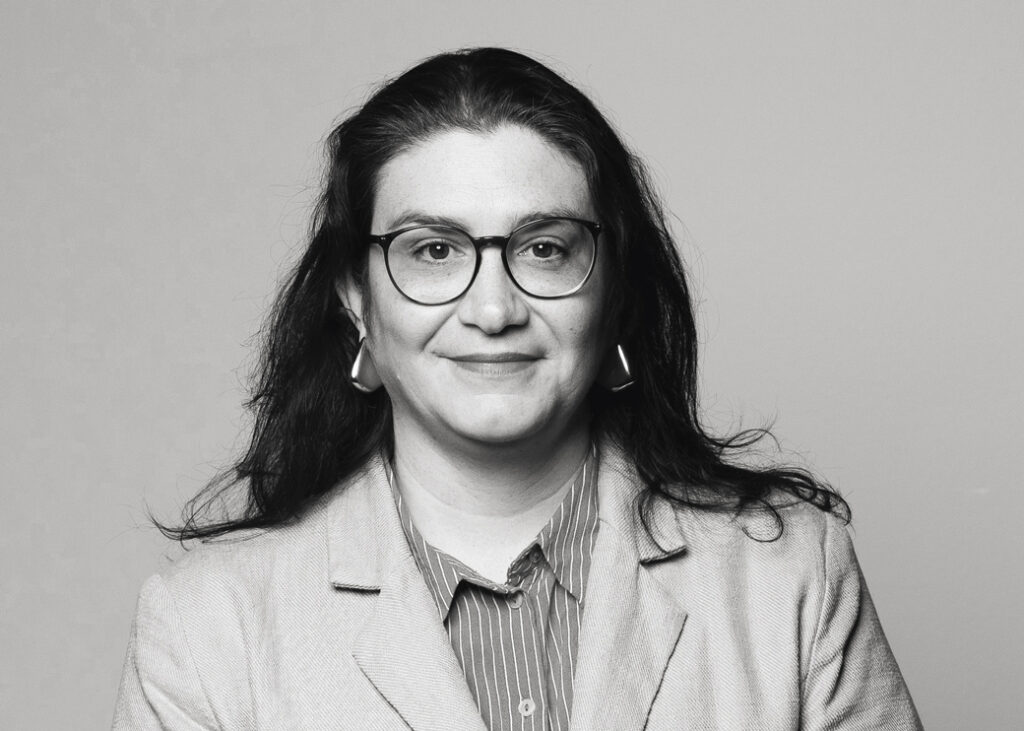
To her, moving from Brazil to Europe was an opportunity to realise her dream of working as a researcher.
“An academic career in Brazil usually leaves very little to no time for research compared to Europe. The work is more teaching oriented.”
Lyra came to Finland to work on her Environmental Policy doctoral thesis. She has a background in Business Studies, and her current research is about new technologies in the green transition.
She had been accepted to doctoral programs in both Leeds and the University of Eastern Finland in Joensuu. Finland interested her thanks to a four-year work contract she had been promised. Lyra had already met her advisor at a conference but knew very little about Finland.
”An academic career in Brazil usually leaves very little to no time for research compared to Europe. The work is more teaching oriented.”
Mariana Galvão Lyra, researcher, LUT Business School
“I visited the embassy in Rio and said I was moving to Finland but did not know much. The Finnish worker replied that the Helsinki airport is never closed, not even in winter. I wondered what that even meant!”
Moving from a metropolis to Joensuu was a shock. Lyra found an apartment far from the city centre, and especially in the dark winter days she felt as though she was living in isolation. It took her years to feel at home.
However, work was everything she had dreamed of. She was able to focus on her research and speak at conferences about the subject of her thesis. Advisors invited her to activities and their homes. The university’s human resource management helped with everything.
“The interesting paradox of Finnish culture is that Finns love to help but hate asking for help.”
During her doctoral research, Lyra spent a few months in Northern Italy and Spain. She enjoyed her time there because she felt these countries were culturally closer to her home country than Finland. However, her university experiences made her miss Finland, where things usually work well and people have a direct and equal relationship with each other.

“This year, I am working as a part-time associate professor in Portugal. It is funny how they treat me like a king or queen. I prefer the Finnish style.”
These days, it is easy to work at the university in English, but in the early days, Lyra got frustrated with group emails and once sent a message asking why the emails were in Finnish when they knew there were many non-Finnish speakers.
“My advisor said I can ignore the emails, but that was wrong. I should have tried to understand those exact emails to learn how things work.”
According to Lyra, language has also been made into a problem at union meetings. Some oppose the use of English as the main language when non-Finnish speakers are present.
“It is not about giving up the Finnish language but making the meeting understandable to everyone. Gathering an international community in the same room is different from sharing power, knowledge, and your voice with that community.”
”It is not about giving up the Finnish language but making the meeting understandable to everyone.”
Mariana Galvão Lyra, researcher, LUT Business School
Lyra no longer considers herself an “international” researcher. Her child is Finnish, she owns a home in Finland, and she was issued permanent residency in 2020.
She herself offers assistance to newcomers and is involved with organising events. Many do not realise how expensive life in Finland can be and how uncertain career prospects can be. When Lyra has been asked about Finland, she has suggested considering the move carefully. From her Finnish colleagues, she hopes for empathy towards people coming to Finland.
“People born in Finnish society and grown up in this system cannot understand the kinds of challenges international staff faces. Only through discussion, exchanging experiences, and learning from those coming here can people and organisations help more effectively.”
Teachers have freedom in Finland
English teacher Saeed Ahmad currently works at the University of Eastern Finland’s Language Centre, but he was originally brought to Finland by his wife’s work as a researcher.
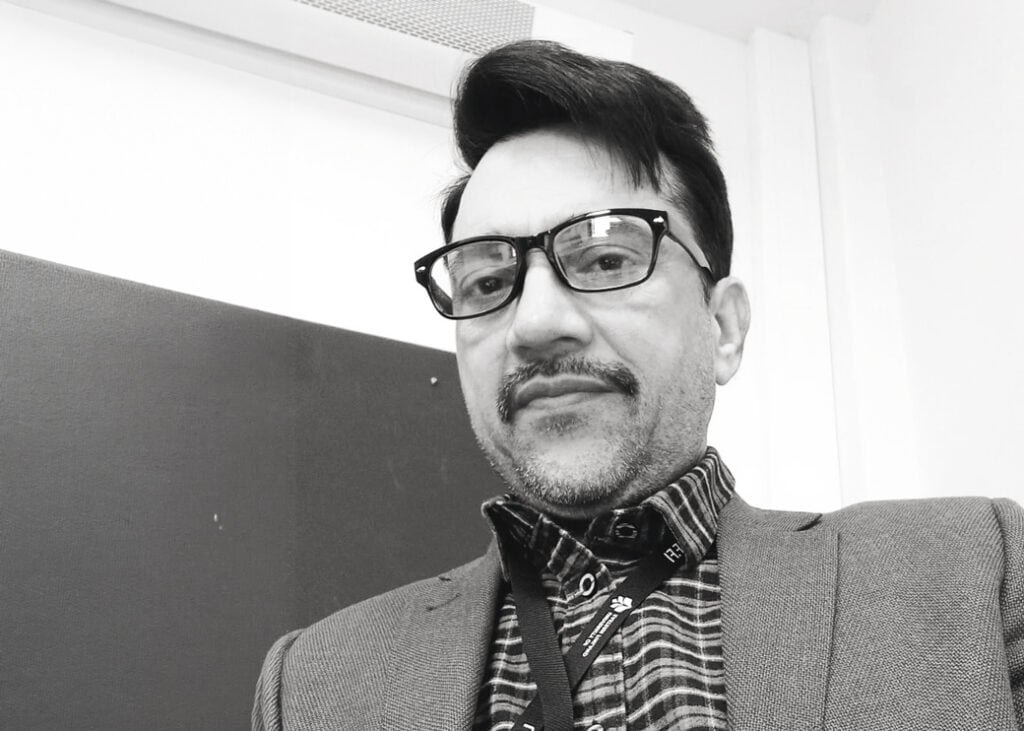
Originally from Pakistan, Ahmad previously lived with his family in Saudi Arabia, working as an associate professor. When his spouse got a postdoc position at UEF in 2021, they faced a difficult decision. At that point, they already had two children. It was impossible to consider living in different countries and choosing whom the kids would live with.
“I decided to resign from my job, come to Finland with a spouse’s residence permit, and see what happens.”
While many who move to the country experience culture shocks, Ahmad took the move in a relaxed and adaptable attitude. He thinks coming to Finland went well because he had already experienced moving to a foreign culture. He had even changed continents before.
After graduating, Ahmad worked at a business school in Pakistan as an English teacher, then as a researcher and teacher in China, then again in Pakistan on the tenure track until he went abroad once more, to Saudi Arabia.
“I was unemployed when I came to Finland, but I was never worried for my career. I was hopeful and took the move as an adventure. We came from the hot Saudi Arabia where the temperature rises to 45 degrees. When we came here, the weather was cool so we enjoyed it a lot.”
”Occasionally, if university meetings or events are in Finnish without a translation, those of us who moved from elsewhere have a slightly hard time because we want to follow what is happening.”
Saeed Ahmad, English teacher, University of Eastern Finland’s Language Centre
In Finland, Ahmad enrolled in an integration programme and started learning Finnish. He did supplementary pedagogical studies at the University of Oulu and obtained a decision on recognition of his qualification in Finland.
The first step into Finnish work life was a fixed-term employment period of about two months at the Kuopio Adult Education Centre in 2022. At that point, Ukrainians had arrived in Finland, and Finnish and English studies had been arranged for them. Ahmad got to teach them English.
Through public employment services, he found an internship at the Savonia University of Applied Sciences, teaching Business English. When a group of nurses from Egypt came to Savonia, Ahmad taught them as well. Afterwards, he got a job at the UEF Language Centre.
Over three years have now passed in the Language Centre, and Ahmed is enjoying himself. He teaches at both the Kuopio and Joensuu campuses and sometimes remotely from Kuopio. Alongside his work, he has completed a Finnish course or two nearly every semester.
“Until now, I believed in teaching English in English, but now I think it is okay to also speak Finnish sometimes. Occasionally, if university meetings or events are in Finnish without a translation, those of us who moved from elsewhere have a slightly hard time because we want to follow what is happening. However, I do not feel like I am left alone, because help is always available.”
The family plans to stay permanently. Their youngest child was born in Kuopio, and the kids have adapted to life here.
Ahmad says his work here is very different from Pakistan, China, and Saudi Arabia. Here, a teacher has plenty of autonomy and can plan what he wants to teach and what methods he wishes to use.
“This is the first time in my career I have experienced such freedom.”
“Take some time and invite them to coffee”
To many foreign researchers, Finland is one option among many, and not necessarily the first option. On the other hand, Aalto University Professor Lily Diaz-Kommonen had a strong experience in the 1990s that made Finland a place she wanted to be in.
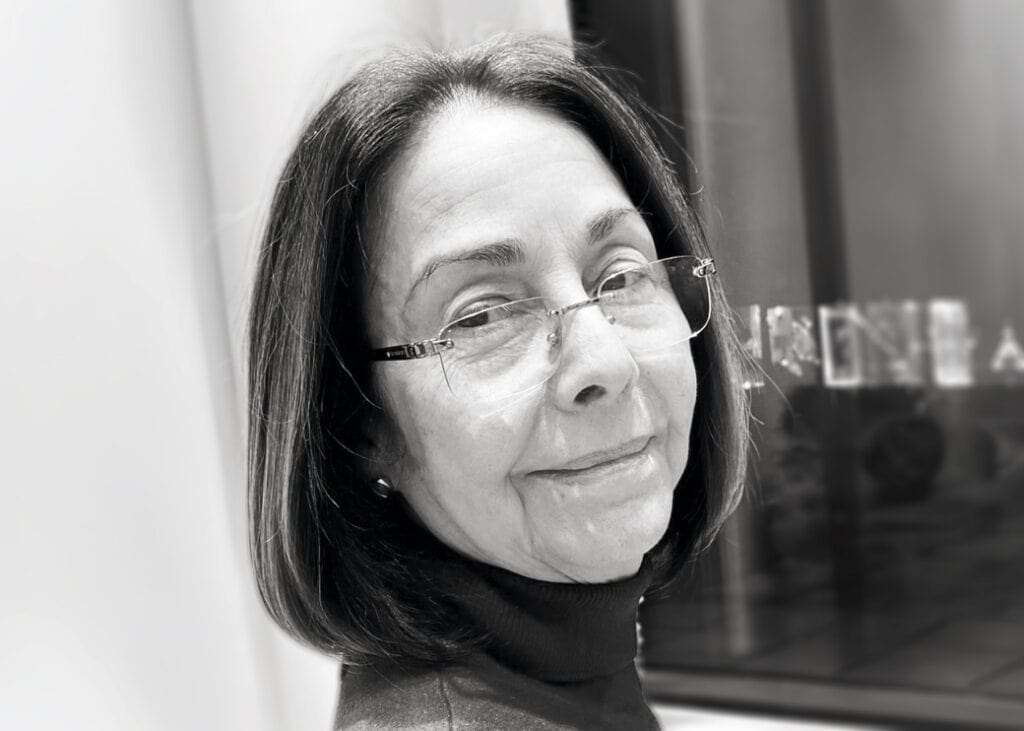
In the 1990s, the Puerto Rican researcher-artist who has worked in the United States and Spain participated in the ISEA94 conference, organised by media art trailblazer Minna Tarkka.
“It felt like everyone who was someone in the new media art field was present.
Once, in the University of Art and Design Helsinki’s lunch cafeteria, she happened to sit at the same table with Philip Dean, the head of Media Lab Helsinki. Inspired by the conversation they had, she applied for a doctoral researcher position at UIAH and started there in 1995.
The exciting field of art studies was an important reason to move. There were others as well. One was love, as Diaz-Kommonen found a partner in Finland. Another was health. Before coming to Finland, she worked in Spain on a Fulbright stipend and got sick frequently.
“A doctor in Madrid said I needed a place with many forests and trees, where it is easy to breathe.”
”I don’t know if that is because women are so strong here, but I felt like I could speak and what I said mattered.”
Lily Diaz-Kommonen, Professor, Aalto University
Diaz-Kommonen spent her childhood in Puerto Rico and Venezuela. In the United States, she completed a bachelor’s degree in anthropology and a Master of Fine Arts in Computer Arts degree and gravitated towards her passion of photo art. In the New York art scene, she lived the “crazy years” of the 1980s, as she calls those days. Occasionally, she worked on Wall Street at the Merrill Lynch investment bank as a graphic designer.
In the United States, a Spanish-speaking Puerto Rican woman faced prejudice, racism, and denigration. Compared to that, the atmosphere in Finland felt good.
“I don’t know if that is because women are so strong here, but I felt like I could speak and what I said mattered.”
Aside from that, the culture felt foreign. She had to learn to think like her colleagues did. The dark times were physically taxing, and Diaz-Kommonen was unable to wake up in time for a couple of years. Her financial situation was not good in those early years. She also needed to learn to cook, because she was used to dining out in New York.
“At the time, there were maybe two Chinese restaurants, one of them next door. They had maybe two dishes that resembled anything I had eaten before.”
Diaz-Kommonen applied for project funding from the Research Council of Finland with professor Pekka Korvenmaa and received it. Her doctoral thesis looked at new media as a tool for archaeological and historical research.
She recalls UIAH of the 1990s as a special place, dynamic and fascinating.
“I am not saying it is not dynamic now, but we are part of a larger institution and we have all kinds of rules – and that is not a bad thing either. But I was just reminiscing with a colleague on how great it was to live in those days.”
Diaz-Kommonen’s research subjects are related to anthropology, design, cultural heritage, interaction between people and computers, and new media. She got her first fixed-term professor job in 2004 and a full professorship in 2014. She has led research projects with funding from the EU’s Horizon 2020 and Creative Europe programmes, for example.
These days, Diaz-Kommonen offers support to researchers moving to Finland and professors starting their careers. She says integration takes time and requires enthusiasm and initiative from arrivals. Receiving colleagues should pay attention to people and get them involved, hear their ideas and problems.
“Be friendly. Take some time from your busy schedule and invite them to coffee.”
Who is an international researcher?
When postdoctoral researcher Ekaterina Borozdina from the Tampere University interviewed fifteen social scientists with foreign backgrounds, many questioned the term and did not necessarily consider themselves “international”.
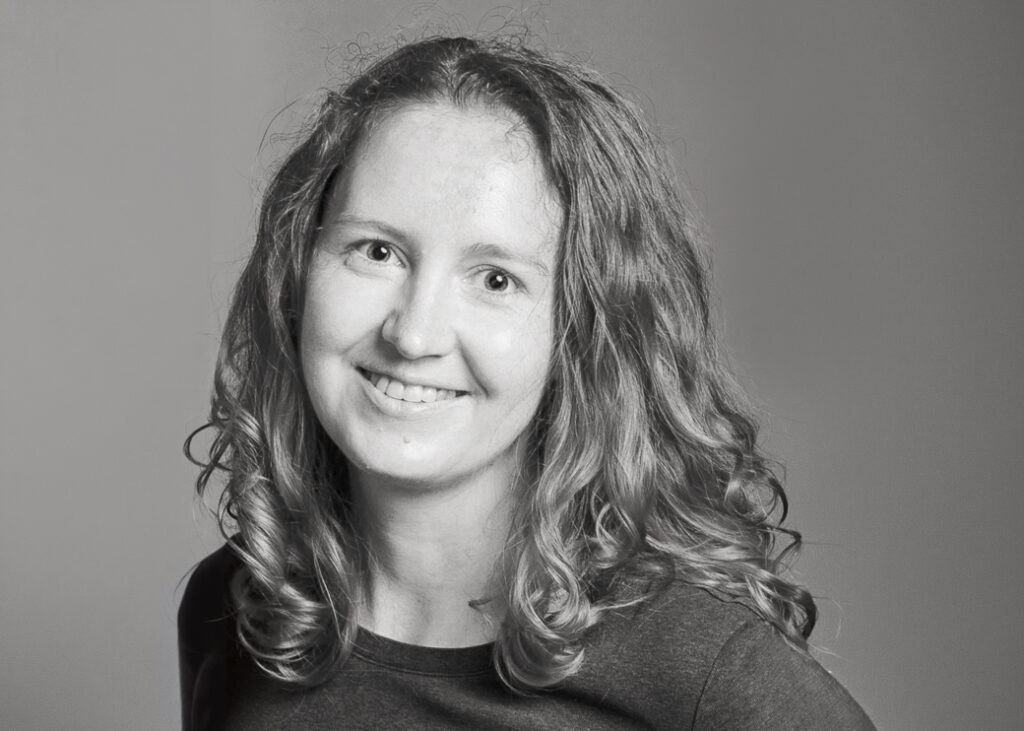
In late 2024 and early 2025, Borozdina conducted an internal study within the university and also published her findings as a small article. According to her, foreign personnel are easily lumped in together in the same category despite their conditions, experiences, and professional and social statuses varying significantly.
“Some have been educated in Finland and spent their whole career here and consider themselves Finnish researchers. Others are temporarily foreign researchers. Once they return to their home countries, they become ‘regular’ American, Swedish, or Chinese researchers.”
Those in stable jobs have different concerns from those whose residence permit threatens to expire after their fixed-term contract ends or those who, as grant-funded researchers, lack the social security enjoyed by their fully employed colleagues. When the university considers support for international staff or politicians wonder how to attract international experts, the answers depend on what kind of “international” group they think of.
Even those interviewed for Borozdina’s study have different views. Those who want to stay wish for incentives from the university to learn Finnish. Those who are here on a temporary basis absolutely do not want to burden themselves with language studies.
“We cannot generalise what international researchers want. The definition is political, meaning that certain agendas and interests are prioritised and others are pushed aside.”
The academic community is not the same for everyone either. Many work environments fit in one university.
“As a sociologist, I think internationalisation is not about individuals but institutions and structures, making the whole community more international.”