Work in Finland enables creativity and cooperation
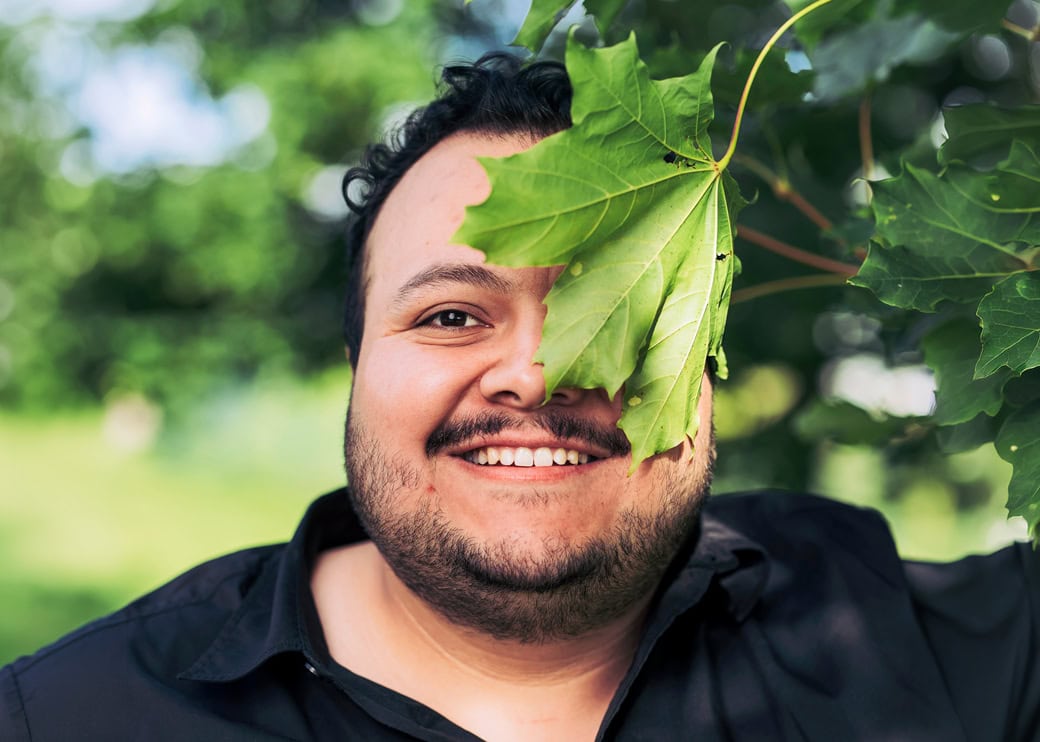
Juan José Quispe has experience of the academic cultures in several countries. He is now enjoying life in Finland at the University of Helsinki’s Faculty of Pharmacy, but in the future he wishes to improve the quality of higher education in his home country of Ecuador.
TeXT lasse pakarinen IMAGES aleksi poutanen ENGLISH TRANSLATION MARKO SAAJANAHO
Studies and a research career have taken Juan José Quispe a long way from his home country of Ecuador. Through Mexico, France, Poland, and Germany, he has ended up in Finland and now works as a postdoctoral researcher at the University of Helsinki’s Faculty of Pharmacy.
“I joke that every time I get a new job, I change latitudes. My next job would probably be in the Arctic”, Quispe says.
As a bioscientist, Quispe’s background is firmly in core research. His doctoral thesis – completed in Münster, Germany – covered optogenetics, where cell functions are guided with light.
Following his thesis, Quispe wanted to move from core research towards practical development work. Currently, he is involved in a University of Helsinki study with the aim of developing treatment for antibiotics-resistant urinary tract infections during catheterisation.
Why Finland?
After finishing his doctorate, Quispe spent a year working at the University of Cologne. He found himself at the University of Helsinki after discovering an interesting researcher position online, as part of a group headed by Professor Päivi Tammela.
In addition to the research itself, other factors influenced his decision to move.
“In my opinion, the political climate in Germany was not very optimal. The extreme right is rising, I saw it with my own eyes”, Quispe says.
Furthermore, he was concerned by the general German opinion on the Israel–Palestine conflict.
“I did not want to stay in Germany. I met my current boss here in Helsinki, we talked a little, and I liked her project. She liked my experience and personality.”
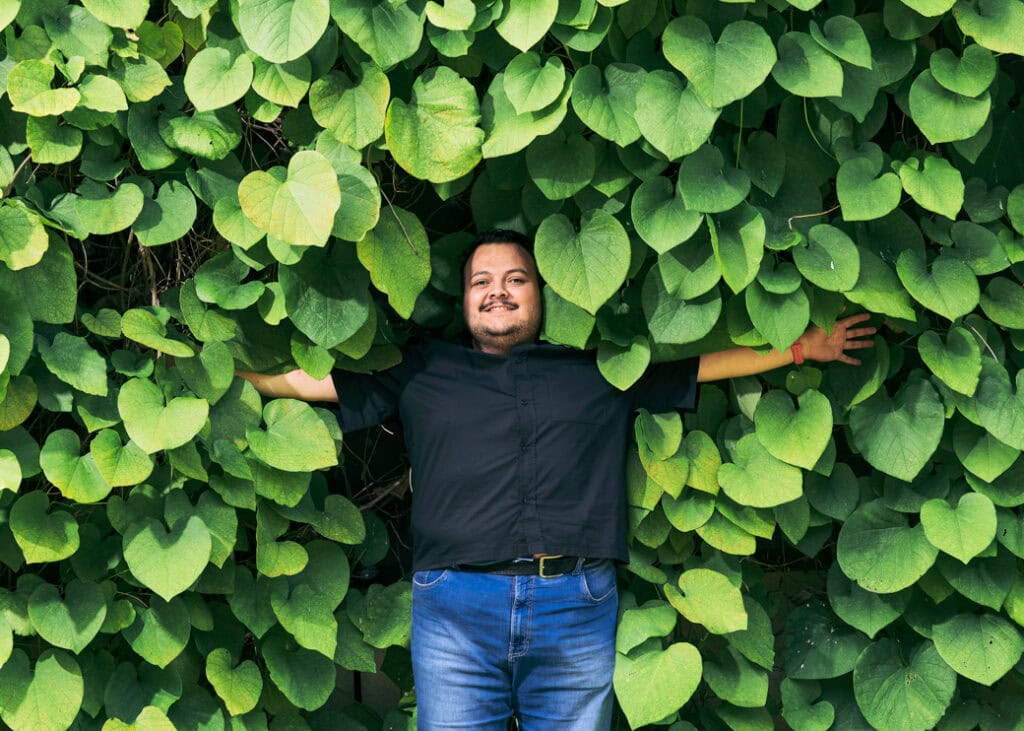
Now, Quispe has already been in Finland for over a year. He moved to Helsinki in late July last year and was initially baffled by the city appearing completely devoid of people.
“I learned that all Finns are on holiday in the summer. That was a culture shock to me.”
Quispe tells us the move itself went smoothly. He thanks the University of Helsinki’s international personnel service, which helped him both find a home and navigate immigration-related bureaucracy.
Flexible and open work community
Quispe says he enjoys working life in Finland. According to him, people in science at least are very open to cooperation with foreigners, and he disagrees with the claim that Finns are introverted or reserved.
“I feel like here in science, people are very open to talk, cooperate, and even be friends. I really like working here with my Finnish colleagues.”
The work community is also multicultural, with coworkers coming from many different countries. Quispe praises the workplace interaction.
Finnish work culture differs from Germany and France, where hierarchies are strong and supervisors more controlling. Resources and working hours, for example, are closely monitored.
“When I moved here to Finland, I did not know how important trade unions were.”
“Finland is a bit more relaxed. There is more room here for creativity and cooperation.”
As an example, he mentions not having to stick to 9-to-5 workdays. If a test takes ten hours one day, hours can be more flexible another day.
The work community has also brought friendships with it. Quispe himself has been actively building them because he enjoys organising activities such as game and bar nights.
Active in an association
After moving to Finland, Quispe quickly became active in the Helsinki University Association of Researchers and Teachers. He takes an interest in workers’ rights and finds they can still be improved even though many things are already well in the EU.
Social participation is important to Quispe. He says he was politically active in his home country of Ecuador, although 15 years have already passed since then.
“When I moved here to Finland, I did not know how important trade unions were.”
Following his move in the summer, he joined HUART as early as October at one of the association’s events. He became a member of the board as soon as January, having been encouraged by fellow members.
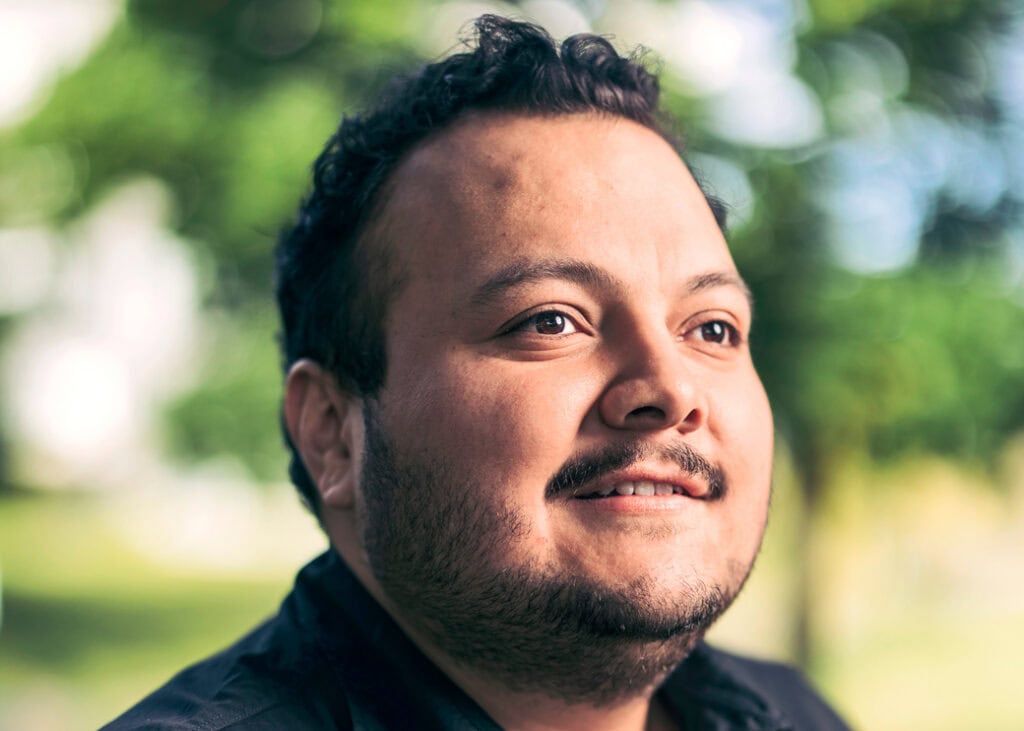
“I believe I have ideas and experience I can use to help make a difference.”
Quispe says he became a union member mostly for ideological reasons rather than personal benefit. He wants to improve cooperation and the position of workers but also understands that for many, unemployment benefits among others are an important part of membership.
Only good things to say about Finland
In his current hometown of Helsinki, he enjoys the high quality of life. The city’s activities have been developed specifically from the residents’ perspective. He ponders that he has never been to another city where one of the main landmarks was a library like Oodi where one can both learn and do things. He also praises the adult education centres where one can learn skills from languages to crafts.
He also values the fact Finns are open to speaking English when they notice someone from abroad is not yet very fluent in the local languages. This is not a certainty in Germany, for example.
When you really dig deep, you get Quispe to mention just one negative aspect of Finland and Helsinki – the dark winter.
“That is the only thing I hate. The first time I was here in the winter, it already got dark at 3:30 PM. It almost makes me cry just remembering that. Otherwise, everything is great.”
Quispe remarks that higher education in Ecuador is not at a high level. That is why he feels fortunate to have received a grant and got to do his bachelor studies first in Mexico and later in Europe.
He is currently planning to stay in Finland for several years. Alongside his current job, he has applied for funding for a side project of his own. He also wants to learn Finnish. However, his long-term plans include returning to Ecuador. There, he would like to improve the quality of higher education, both science itself and obtaining funding, for example.
Translator’s note: All quotes were translated from the Finnish version of the article and may not exactly match the original English responses in terms of wording and structure.
Juan José Quispe Haro, postdoctoral researcher
Born: 1995 in Ecuador.
Work: Postdoc researcher at the University of Helsinki’s Faculty of Pharmacy.
Background: Initially studied biotechnics. PhD in 2025 from the University of Münster, Germany. Master’s degree with Erasmus Mundus grant from the Université Paris-Saclay in Paris and the University of Wroclaw in Poland.
Hobbies: Latin dance, nature photography.
Known in the work community: As the larva guy, being the only person in the building to use insects in his research, more specifically Galleria mellonella larvae.
Not known for: Growing up on a farm raising guinea pigs. Slightly reminiscent of rabbit, guinea pig meat is popular in Ecuador and can be served, for instance, grilled with potatoes and peanut sauce.
Increasing number of international members
An increasingly larger portion of international Union of Research Professionals members comes from countries outside the EU/ETA region. In 2026, they comprised 13.6 percent of members.
In a member survey, international researchers more commonly reported uncertainty over continued employment, funding difficulties, insufficient research time, and challenges related to career progress.
They were attracted to Finland especially by an interesting research environment, work and career opportunities, personal reasons, and international career progress.
The most significant challenges listed by international members were language and cultural differences, livelihood uncertainty, lack of information on employment terms, lack of appreciation for international experience, and employment difficulties for spouses. Residence permit issues were another concern.
Lengthy processing times were highlighted among the issues in the residence permit process. Many also found the system unclear and expensive, although about half of the respondents reckoned the support offered by their employer to be sufficient.
About 14 percent of women and 8 percent of men with international backgrounds stated they had encountered racism in their current workplace.
An increased number of international members feel they belong in the work community, trust their employer, and receive enough information about their employment terms.
Source: Union of Research Professionals member survey