“Science would not exist without organisations”
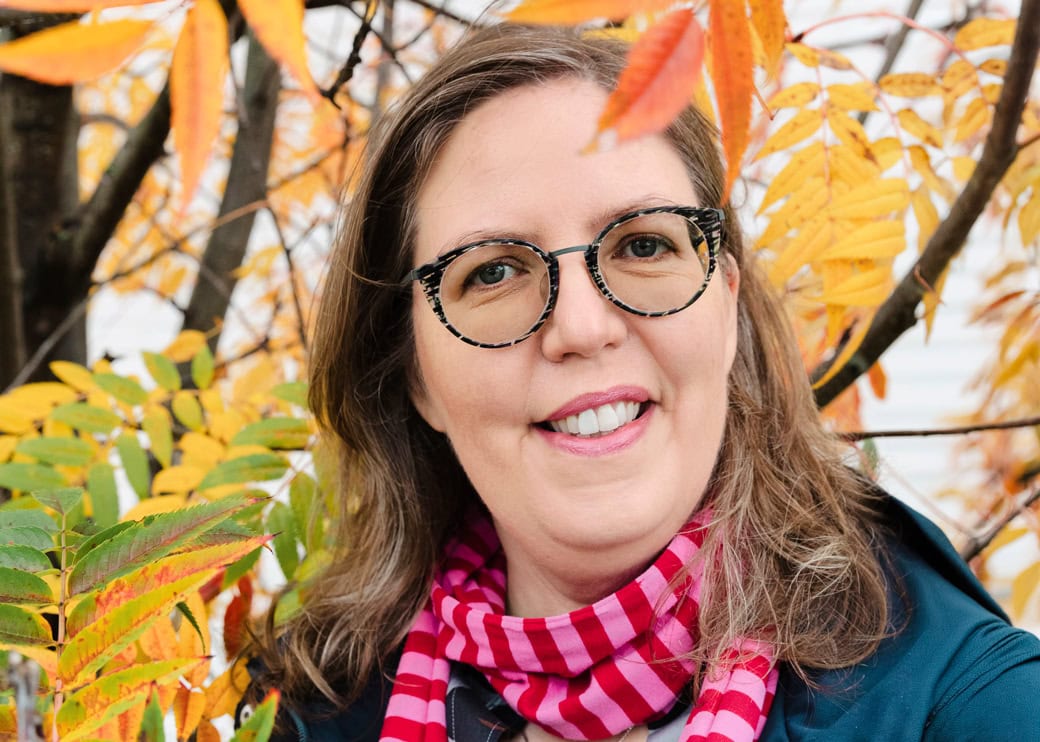
Academic of the Year, Associate Professor Emilia Palonen demands patience from universities, along with recognition for the invisible management work in everyday academic life.
Text minna hiidensaari images milla talassalo English translation Marko Saajanaho
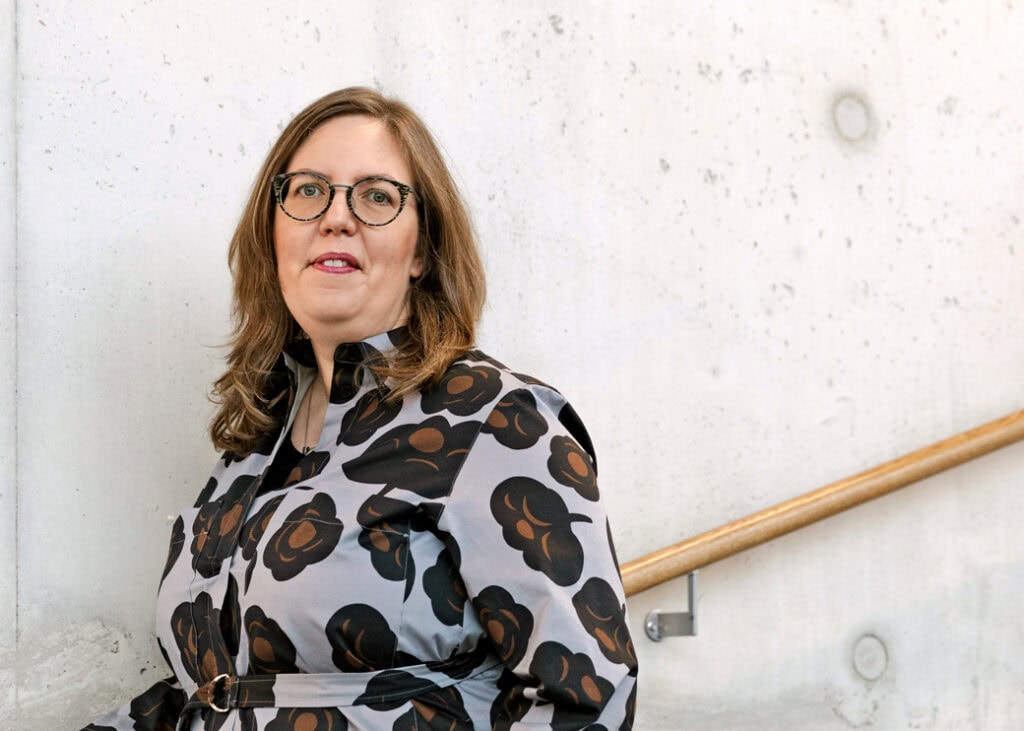
Emilia Palonen, Associate Professor of Political Science and Academic of the Year, regularly comments on her research topics in the media, especially populism and the polarisation of politics. Her work in front of TV cameras is highly visible, but actually just a small part of Palonen’s workload.
A much larger part of her work tends to remain hidden. It consists of working in extensive networks, scientific cooperation, and managing the daily routines of a large research group. In Palonen’s opinion, the collaborative nature of science is not visible enough in the structures and practices of the field.
Palonen heads an international group of several dozen researchers at the University of Helsinki. The Emotions, Populism and Polarisation research group she founded got its start in 2019, when Palonen realised several separate research project belonged together thematically.
Disjointed projects threaten the continuity of science and expertise
Palonen would like to build international cooperation in her fields of research in the long term. She mentions projectification as a common problem at universities. When research happens across separate projects and funding is only granted for short periods, the built knowledge and expertise get fragmented.
“We need thematic, methodical, and theoretical continuity. And how can we retain the researchers that have accumulated valuable expertise in the group? Some turnover is fine, but not everyone is easily replaceable”, Palonen critiques.
The current data-intensive trends, such as the role of artificial intelligence in research, also require different job titles in Palonen’s opinion.
“We now need new kinds of expertise, such as specialist who understand the nature of science and can code with or without AI.”
At the same time, a false notion regarding AI must be done away with.
“AI is thought to bring savings in staff expenses. However, its real value comes from allowing an expert to work more efficiently and achieve more. When taxing your brain, you also need to make sure you get to recover sufficiently.”
Management work is left outside work plans
Alongside her actual research work, Palonen is busy with invisible meta work that takes a large chunk of each workday and even eats into her free time.
”Taking care of researchers’ well-being is a big part of my job.”
“Taking care of researchers’ well-being is a big part of my job.”
The infrastructure of science does not recognise this reality.
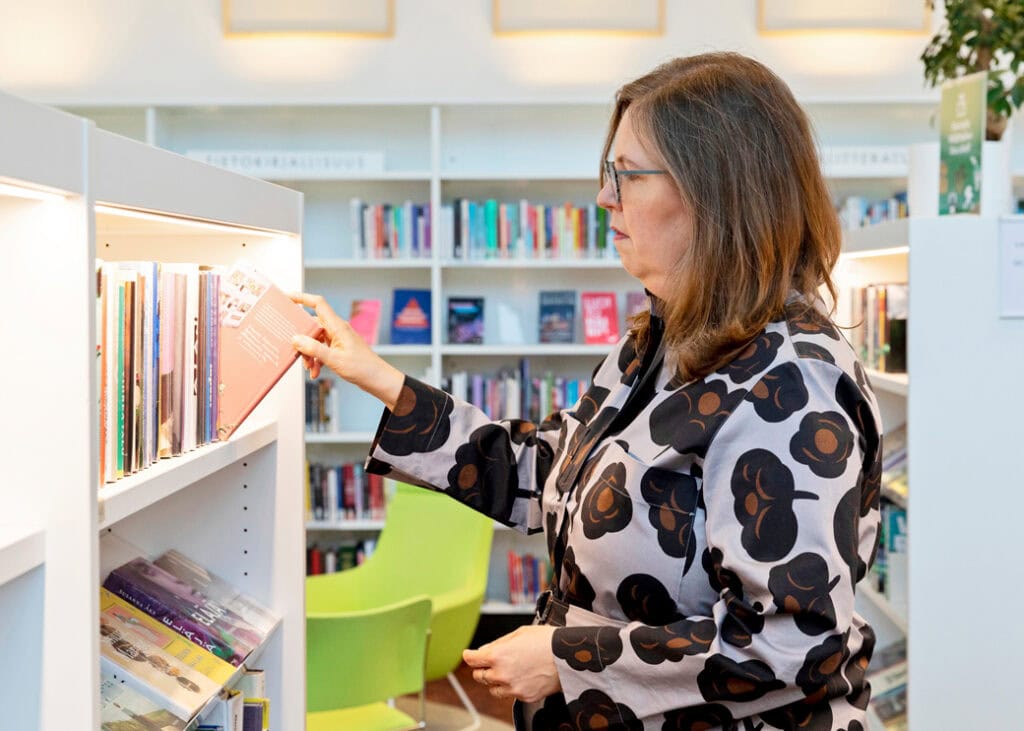
“Heads of research groups are not trained to handle personnel matters. Taking care of HR issues should happen as close to people as possible in daily life, not far away in admin.”
This meta work also does not show in work plans.
“Project management has developed at such a rate that the infrastructure of science has not yet had time to develop understanding of how arduous project management is and what kind of resources it requires.”
Palonen’s own group leader philosophy leans on learning together.
“Scientific expertise is born through shared immersion. I have learned that focusing on myself also means focusing on the research group.”
The spark for community was lit in the UK
The spark for communal science was lit in the United Kingdom. Palonen, who studied Contemporary East European Studies in London, would have liked to go to Argentina to study the country’s transition from authoritarianism to democracy around the time she was working on her bachelor’s degree, but her parents hit the brakes on the plan. Her studies continued at the University of Essex, in programmes devised by Argentinian theorist Ernesto Laclau.
“Back then, I learned that complicated things should be pondered together.”
When Palonen returned to Finland in 2006, it seemed to her that the voice of political scientists was not heard sufficiently clearly. As a postdoc researcher, she represented the Universities of Jyväskylä and Helsinki on the Finnish Political Science Association board. At the time, she also helped create the Politiikasta popular science online publication.
Palonen applied the principle of pondering together she learned in Essex from her postdoc years onwards. She got a full-time position in 2022 and was appointed as a University of Helsinki Associate Professor in 2025.
Scientific associations are the foundation of disciplines
According to Palonen, scientific associations and peer organisations play a significant role in science. Similarly to research cooperation, their work often remains unseen and does not get enough resources or recognition.
“Community activity, such as magazines they publish and events they hold, makes a discipline. Organisation work also helps researchers build a multidimensional researcher identity.”
Palonen’s own career serves as proof.
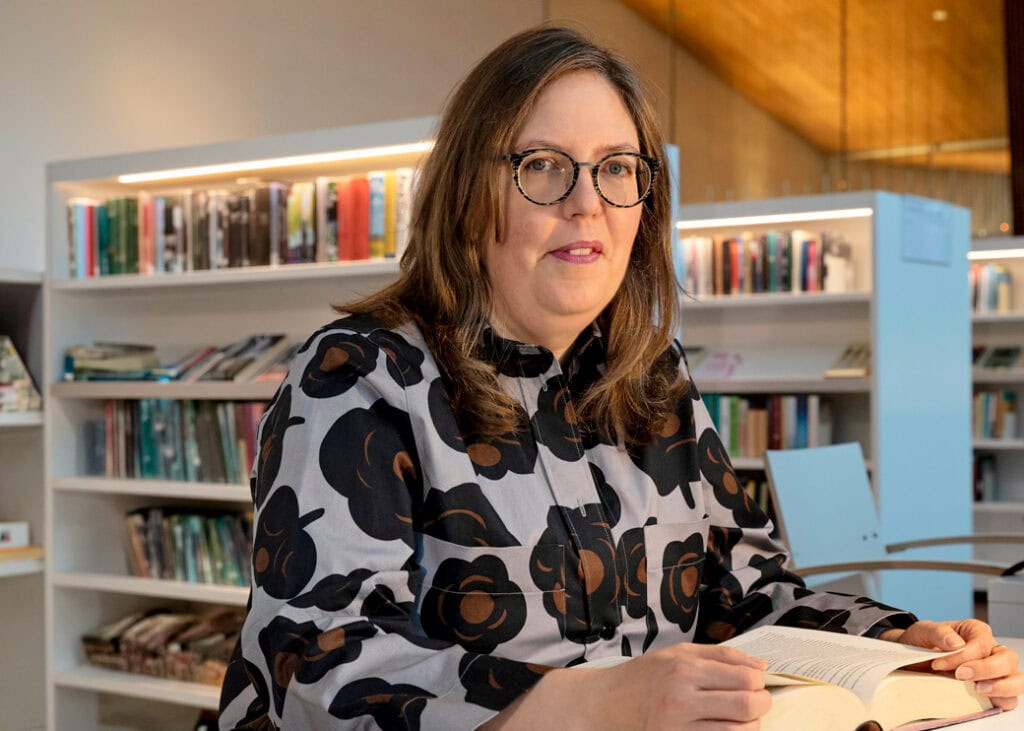
“I got involved with scientific associations to get to know Finnish researchers. Twelve years on the Federation of Finnish Learned Societies (TSV) board ends at the start of the new year. It is important for researchers’ voices to be heard in science politics.”
Palonen has represented the Finnish Political Science Association in an international organisation of the field and served as a TSV representative in national open science coordination.
Scientific magazines produced through volunteer efforts suffer from shrinking funding.
“In many fields, researchers fund open publication of scientific magazines with membership fees, which affects university funding. This is a transition of income from employees to employer.”
Maunula House as an analogy for the university community
Palonen works near her research group in her Downtown Helsinki office. On remote work days, she gets to counterbalance her demanding specialist work in her residential area of Maunula, Helsinki. Palonen moved to the neighbourhood known for its activity and got to participate in the resident-driven design of the Maunula House in 2013. She often invites international researcher guests to the ten-year-old multipurpose building.
“For me, the Maunula House serves as an analogy for the university community. Residents need to have their voices heard, and its position must be defended. Similarly, I encourage young researchers to use their voices on behalf of science and work in the science community.”
”Free science would not exist without the field’s communities.”
Palonen sees her selection as Academic of the Year as a collective achievement above all.
“I feel this reward also serves as recognition for wider scientific volunteer work and scientific associations. Free science would not exist without the field’s communities.”
PhD of Political Science Emilia Palonen
Born: 1977 in Kuopio, Finland
Work: Associate Professor of Political Science, University of Helsinki
Family: Engaged to philosopher of religion Aku Visala, with a teenage son
Hobbies: Music, picking mushrooms, food preservation
Known in the work community for: Speeches
Not known for: Palonen is an IF Gnistan season ticket holder